
When Love Becomes a Shadow: The Inner Geography of Alienation
On the paradox of loving a child who has learned to fear you, and the quiet work of holding on without holding on tight.

Originally published on December 15, 2025. Preserved here on Substack.

There is a strange thing that happens when a person you once knew as your child seems, over years, to forget the sound of your voice, the feel of your laugh, or the way your presence once grounded them. It isn’t just loss; it is an internal inversion. Your love becomes a shadow. Something haunting, familiar, yet painful to face.
I know this because I lived it... year after year... as the father of two sons, now ages 28 and 26.
What has stayed with me isn’t just the external stripping away of connection, but the internal fracture it caused in myself. Some days I felt like the person I was before alienation didn’t exist anymore. Not because I lost my identity, but because I was forced to confront parts of myself I never knew were there: deep fears, hidden hopes, and unexamined beliefs about love, worth, and attachment.
This isn’t a story of blame. It is a story of honesty with the inner terrain... the emotional geography that alienation carved into my heart.
The Silent Pull
Love doesn’t disappear when a child’s affection is withdrawn. Instead, it changes shape. It becomes more subtle. Less spoken, but no less alive.
When your kids are little, love shows up in bedtime stories, laughter, scraped knees, and easy smiles. When they’re adults and distant, love shows up in the quiet hurt. It is in the way you notice an empty chair, or a text that never came, or the echo of a memory that still makes your heart ache.
This kind of love doesn’t vanish. It becomes a quiet force pulling you inward... toward reflection instead of reaction, toward steadiness instead of collapse.
Unmasking Attachment
There is a psychological reality at play here that goes beyond custody schedules, angry words, or fractured holidays. When a person, especially a young person, bonds with one attachment figure and rejects another, something profound is happening in the architecture of their emotional brain.
I learned that in some dynamics of parental influence, children form a hyper-focused attachment to one caregiver and turn away from the other. As the High Conflict Institute notes, that pattern isn’t about rational choice; it is about emotional survival. Attachment drives us to protect what feels safe and to fear what feels unsafe... even when the fear isn’t grounded in reality.
When my sons leaned with all their emotional weight toward their mother, even to the point of believing impossible things about me, it was never just “obedience.” It was attachment in overdrive. It was a neural pull toward what felt like safety, acceptance, or approval.
And when that sense of safety was threatened by even a hint of disapproval? The defensive system in their psyche kicked into high gear.
This isn’t a moral judgment. It is the brain trying to survive.
The Paradox of Love
Here is the part no one talks about in polite conversation: You can love someone deeply and grieve their absence just as deeply... at the same time.
It is one of the paradoxes that stays with you long after the world expects you to “move on.”
You can hope that the door will open someday; and you can also acknowledge it may never open in this lifetime.
You can forgive the emotional wounds that were inflicted; and also mourn the lost years that you’ll never get back.
You can love someone unconditionally; and still refuse to let that love turn into self-erosion.
This tension... this bittersweet coexistence... becomes a part of your inner life. This is where the real work lives.
When Attachment Becomes Overcorrection
When children grow up in an environment where one caregiver’s approval feels like survival, the attachment system can begin to over-regulate itself. Instead of trust being distributed across relationships, it narrows. The “safe” figure becomes everything. The other becomes threatening by association.
For my sons, that meant years of believing narratives that didn’t fit reality.
The Surveillance (2011) It started with the distinct feeling of being watched. I remember calling to say goodnight in those early years and sensing a heavy, guarded weight in the air. The conversation felt monitored.
The boys seemed to feel it, too. Their tone often shifted, as if they instinctively understood that a laugh, a shared inside joke, or an unscripted “I love you” might be interpreted as treason. They learned to perform indifference not because the affection was gone, but because expressing it felt unsafe.
The Manufactured Fear (2012) Then came the distortions. Because of my background in cybersecurity, innocent technical glitches were reframed as evidence of my malice. If the internet went down at the other household, the explanation adopted by the boys was that I was “hacking” their network. To a child, that sounds plausible... scary, even. To an expert, it is absurd.
But they weren’t encouraged to think critically about technical facts. Instead, they seemed to bypass logic in favor of loyalty, assigning malicious intent to benign situations because it fit the story they were living in.
The Weaponized Gift (Young Adulthood) As they grew older, the narrative shifted from “Dad is dangerous” to “Dad is manipulative.”
When my oldest son graduated college, I sent him a monetary gift... a simple gesture of pride. He declined it. The reasoning conveyed to me was that the gift would be “used as leverage”… a phrase that sounded more like adult litigation strategy than the words of a recent graduate. The narrative of control overrode the reality of generosity.
Similarly, I maintained a fully funded 529 savings plan for my youngest son to attend San Francisco State. Yet, after one semester, he chose to leave school and move back home. Once again, the available support was treated as a threat rather than a resource; my funding was reframed as a trap. The tragic result was that the “safety” of the nest was prioritized over his own educational opportunities.
The Erasure (2013) Finally, the silence became the default. The narrative was that the door was always open, but the data told a different story. In a single year, I documented dozens of calls that went unreturned... violations of court orders that were met with a shrug. To my sons, that silence wasn’t a blocked phone line; it was proof of my absence.
When confronted with facts, they didn’t question the narrative. They rationalized it to preserve the internal emotional logic they had built around attachment and fear. That is not weakness. That is how emotional survival systems work.
The Inner Terrain
One of the hardest lessons is learning to hold ambivalence without distortion.
In healthy relational development, people can feel both love and disappointment, both closeness and distance, both gratitude and grief... all without collapsing into one extreme or the other. But in severe attachment distortion, the emotional brain tries to eliminate complexity because complexity feels dangerous. It feels unstable.
Experts like Karen Woodall describe how the emotional brain prefers certainty, even if that certainty is painful. Learning to tolerate ambiguity, that strange space where love and loss coexist, becomes a form of inner strength.
What I Have Learned
I write this not to indict, accuse, or vilify anyone. The human psyche is far more complicated than simple cause-and-effect. What I’ve learned through years of quiet reflection is this:
Attachment wounds run deep. They can overshadow logic and memory.
People don’t reject love lightly. They reject fear and threat.
Healing isn’t an event. It is a series of small acts of awareness and presence.
Your internal world is the only place you can truly govern. External reality is negotiable... inner life is not.
Hope Without Guarantee
I have a quiet hope. Not a loud demand, but a quiet hope that one day my sons will look back and see the patterns that were invisible to them before. Not to blame. Not to re-assign guilt. But to understand.
Hope isn’t a promise. It is a stance of openness... a willingness to stay emotionally available without collapsing into desperation.
Healing isn’t about winning back what was lost. It is about cultivating a life that holds the loss with compassion and still knows how to turn toward joy when it appears. Quietly. Softly. Unexpectedly.
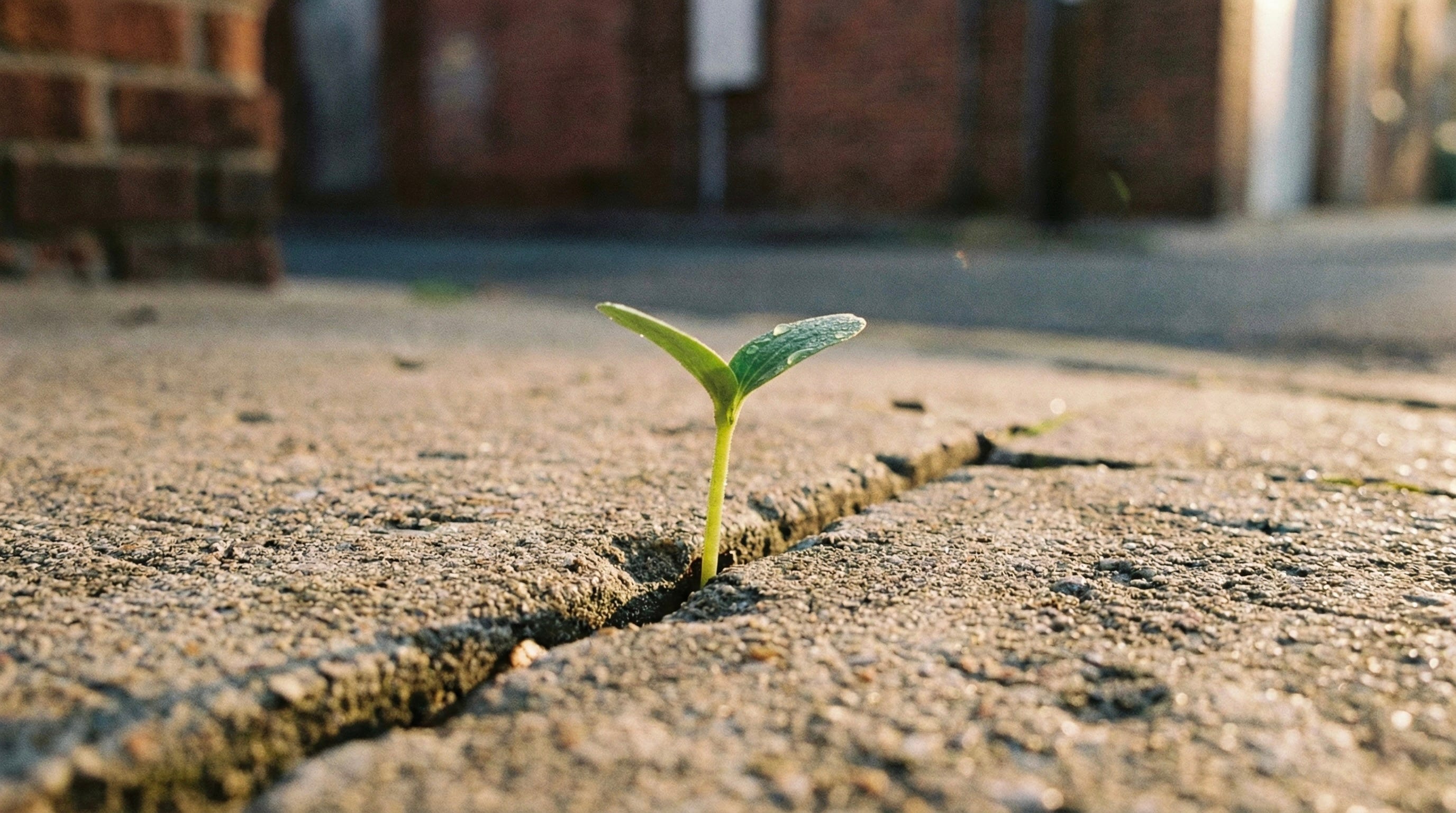
Your heart doesn’t have to choose between love and grief. It can carry both. And in that carrying, something deeper begins to grow.
Author’s Note
This article is a work of personal nonfiction based on my own memory, correspondence, and documentation. It reflects my individual perspective and experience, and is not intended as legal or psychological advice. Some names, timelines, or identifying details may have been changed to protect the privacy of all involved.
A Note on Gender: While I write this from my perspective as a father speaking about an ex-wife, the behaviors of alienation and high-conflict control are gender-neutral. If you are a mother experiencing this, simply swap the pronouns; the pain and the patterns are exactly the same.
References & Resources
Parental Alienation & Emotional Impact
International Society for the New Definition of Abuse & Family Violence: Read Mission
Adult Impacts of Alienating Behaviors (NCBI): Read Study
Attachment & Theory
Attachment and Alienation (High Conflict Institute): Read Article
Understanding the Split Self (Karen Woodall): Read Blog